Celebrating LCA’s Unsung Heroes for Engineers Week
 February 26, 2026
The next time you wash the dishes, grab a drink from the tap, take a shower, use the toilet, or do your laundry … thank one of LCA’s engineers!
Most of us don’t realize it, but if it weren’t for engineers, our water and wastewater couldn’t get from Point A to Point B. That’s why LCA is celebrating Engineers Week, an annual event launched in 1951 to draw attention to the countless positive contributions engineers have made to our quality of life.
LCA employs nine professional engineers/engineers in training. They plan and design most of our water and wastewater treatment and distribution system projects.
“We are proud of our dedicated team of engineers and engineers in training. They design, lead, and execute infrastructure improvements that support LCA’s mission to protect public health and the environment,” says Albert Capuzzi, director of engineering and asset management.
Everything But The Kitchen Sink
Typical projects include the planning and design of a community’s wastewater system overhaul; rehabilitating structures such as manhole covers or sewage collection components; and replacing pumps, meters, and water lines.
Occasionally, the team is called on for larger tasks, like the creation of a new wastewater plant or pump station. Outside consultants are usually called in to handle design for those jobs. The LCA team supervises all of the planning and work.
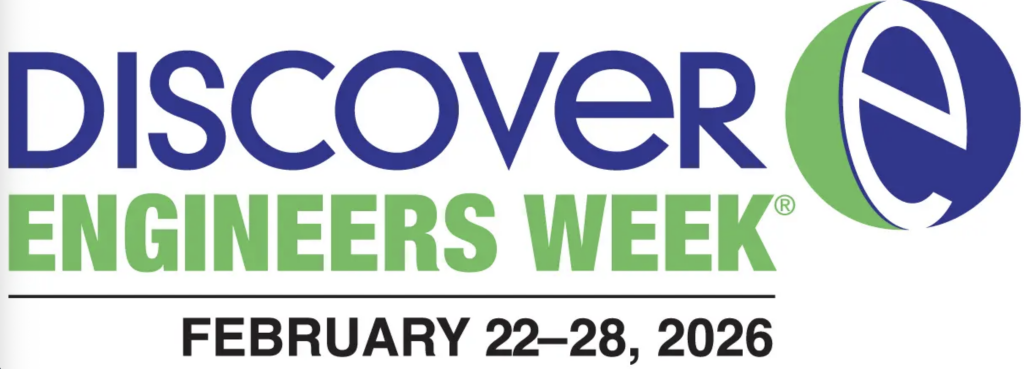
One critical job the team recently tackled was an overhaul of sludge lines at the Kline’s Island Wastewater Treatment Plant (see main photo).
“We upgraded 3,000 linear feet of the main pipes that carry solid waste through the wastewater treatment process,” Capuzzi says. “The new pipes are larger and have a smooth glass lining. This lining helps prevent material from sticking to the inside of the pipes, which means fewer cleanings and less maintenance over time. The project was completed on schedule and cost less than expected. It was also one of the first projects where LCA used Procore Construction Software to manage the design and construction process.”
Not-So-Routine Maintenance
A lot of the engineers’ work is aimed at maintaining existing facilities like Kline’s Island. A few years ago, another such project was the replacement of an old steel water reservoir in Arcadia West, an industrial development in western Lehigh County. An outside engineer determined the most cost-effective way forward was to build a new concrete reservoir. After the tank was brought online, crews dismantled the remains of the old one.
The fact that asset management drives much of the team’s work is no surprise, given the nation’s aging water infrastructure. The team performs condition assessments of all LCA facilities, and with the help of engineers determines their remaining useful life. That includes water and sewer lines, reservoirs, pumping stations, and everything else associated with water and wastewater treatment and distribution. Once a project is identified, it has to be carefully prioritized, planned, and then financially justified to LCA’s Board of Directors.
Lynn Township Plant Upgrade
One of those recent projects was an upgrade of the Lynn Township Wastewater Treatment Plant, one of eight wastewater plants operated by LCA. First built in the mid-1970s, it can treat up to 80,000 gallons of sewage per day.
The plant was originally built with a single clarifier, which is a large tank that allows solids and liquids to separate as part of the treatment process. Since LCA took over ownership and operation of the plant in 2012, the volume of wastewater entering the plant has increased, and the single clarifier ran constantly.
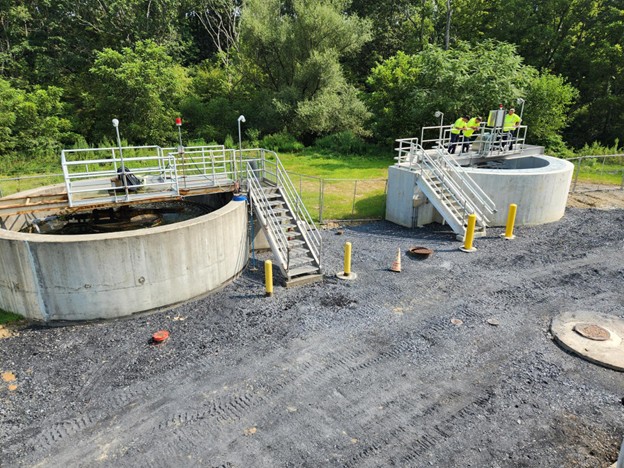
The plant could not be shut down for repairs and could have caused problems if it failed. Adding a second clarifier (see accompanying photo) makes the plant more reliable and helps during heavy rain, when an even higher volume of water comes in. The project was finished on time and within budget.
Park Pump Station Overhaul
One of the biggest projects in recent years was the first phase of upgrading the Park Pump Station, part of LCA’s Western Lehigh Interceptor — a critical, high-volume sewer main that runs along the Little Lehigh Creek.
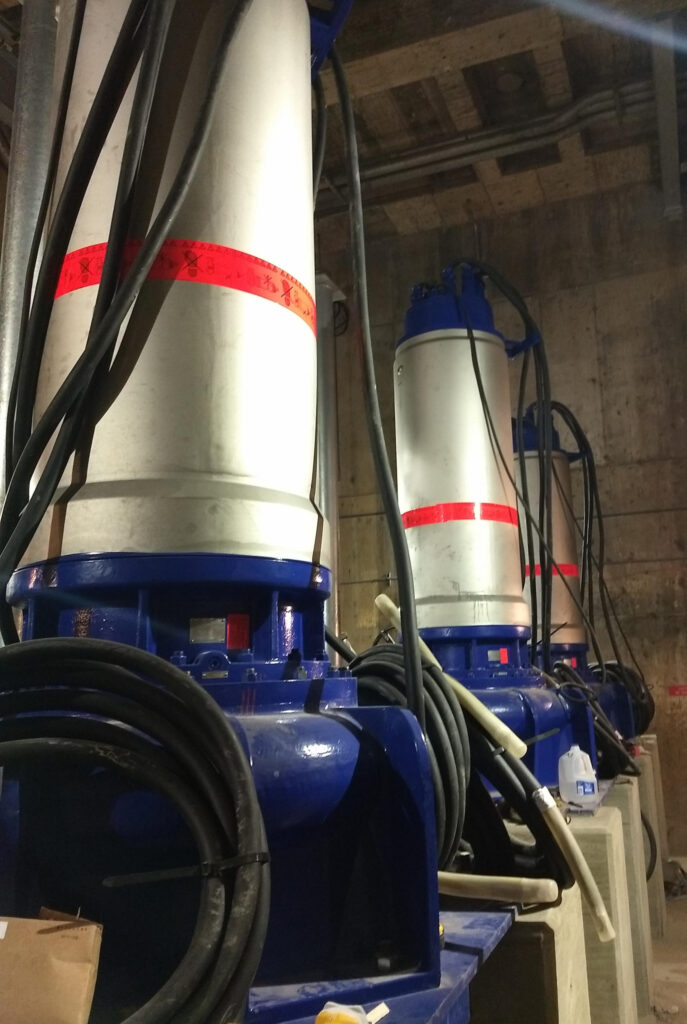
Starting in 2021, “We did a major upgrade of the station … we replaced all the pumps (see photo) and controls, and did a lot of other related upgrades,” says Charles Volk, LCA’s Chief Capital Works Officer. “And we’re currently working on a second phase of that project, to replace a generator. It’s a very important facility.”
Because of the volume of waste the station handles — about 23 million gallons a day — it cannot be taken offline whenever maintenance or upgrades need to be completed.
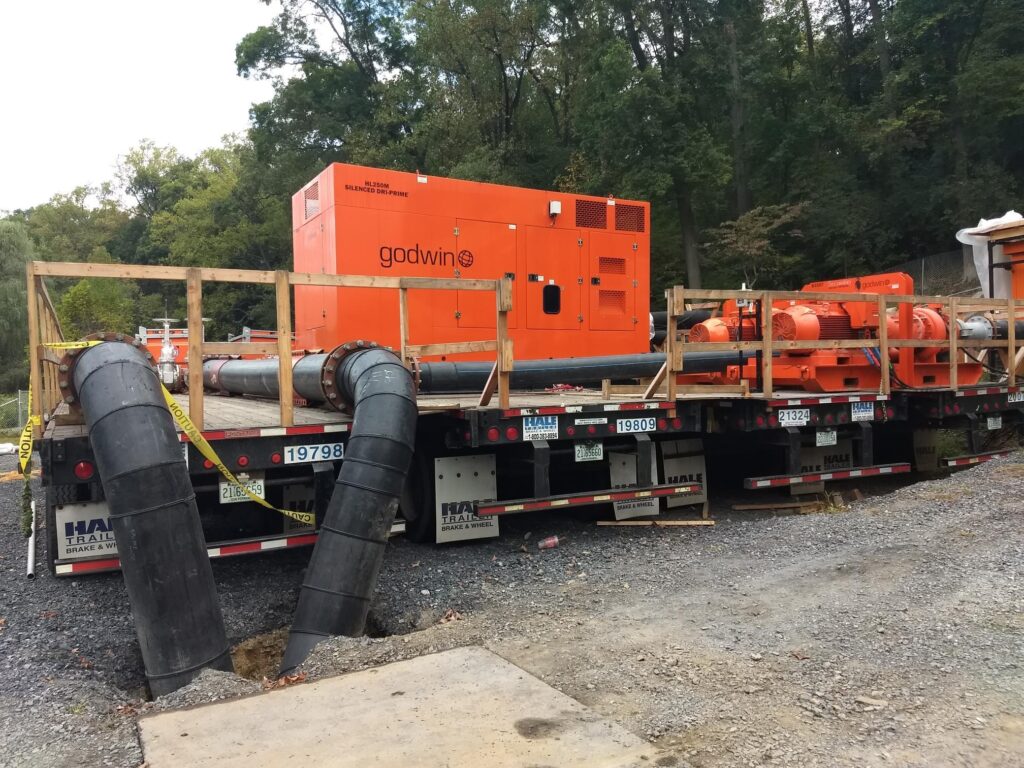
“Any kind of work on that pump station is a major undertaking,” project engineer Amy Kunkel says. “Just to replace the pumps, we had to set up quite a large and complex bypass pumping system (see photo), with extra pumps and generators outside in the Parkway.”
And when LCA worked on the sewer main, a temporary line was run along the surface to carry wastewater through the Parkway.
Critical, But Unseen, Work
Justifying a project’s expense is probably one of the biggest challenges the engineering team faces, Volk says. “Not all of our projects are cut and dry, where we can say, ‘You’ll save all this money if we upgrade the plant,’” Volk says. “Sometimes you have to do an upgrade based on a regulatory issue, or to protect public health, and maybe there’s not a big financial payback.”
Plus, most of the projects come with a high price tag.
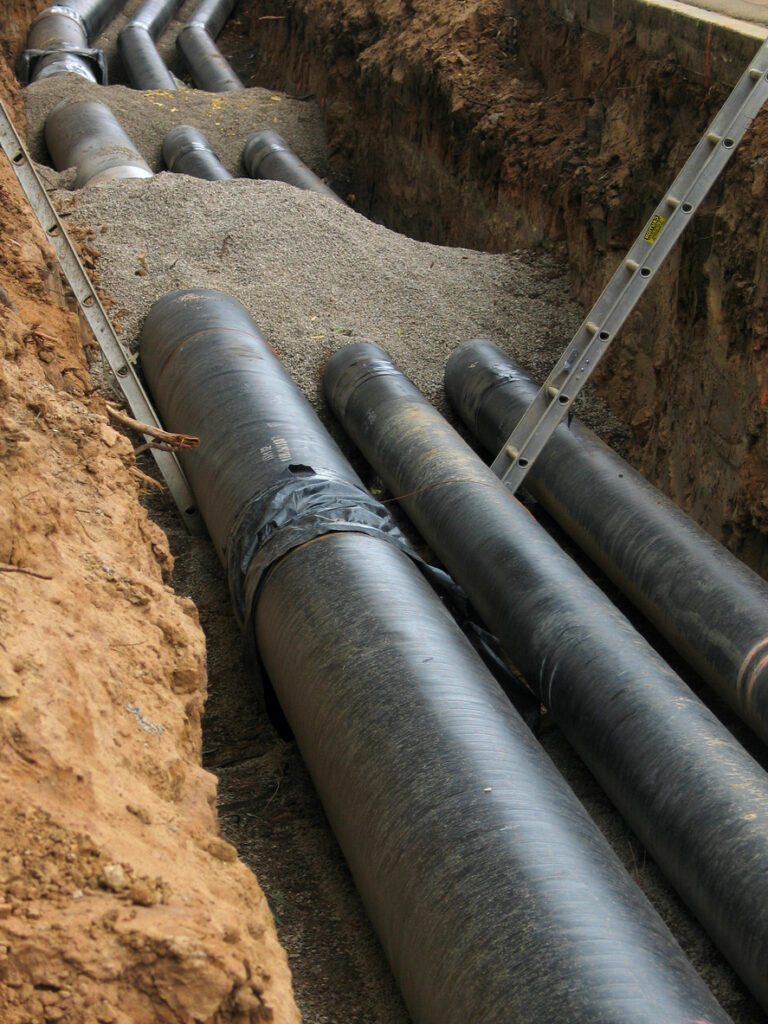
“We do water main replacements (see photo) in the city and suburban divisions to replace the old cast iron pipe. We’ll replace a mile to two miles at a time — and it costs about $2 million a mile,” he says.
“Failing infrastructure is a nationwide crisis,” he continues “A lot of our work as engineers deals with mitigating risk. Most of our facilities are critical. If our systems would fail, there would be an environmental and public health disaster.”
Adding to the challenge is a lack of public perception about the importance of the upgrades.
“Most of the work we do goes unseen by the public,” Kunkel says. “You can see the new tank at Arcadia, but most of the time people just turn on their faucet, and the water is there like it always was.”
To find out more about LCA’s infrastructure improvement plans — and get a closer look at some of the projects our incredible engineers are responsible for — check out our 2026-2030 Capital Plans.
And the next time you turn on the tap, definitely thank an engineer!